


Health benefits of taro leaves and roots: Various names of the taro or kachu plant: Scientific name: Colocasia esculenta. It belongs to the family Araceae. The Hindi, Bengali, and Sanskrit names are Kachu. Colocasia esculenta is also commonly known as taro or elephant ear. It is a very beautiful plant. It’s all part of this plant, such as roots, stems, leaves, and flowers, that are edible.
What kind of plant is taro? Taro {Colocasia esculenta}, are called eddo or dasheen. It is an herbaceous plant. It belongs to the family Araceae. Its edible part is a root-like corm. Taro is a Southeast Asian native plant. Taro is an edible plant; all parts of this plant are used for edible purposes.
Benefits of harvesting taro: All parts of this plant are very important, and many food materials are made from it. With a little care and patience, you can enjoy many edible items made from taro roots.
Taro is a very amazing plant. However, taro can also be harvested by cutting the stem just above the root ball. Be sure to take care not to damage the roots, as they are the most valuable part of the plant. With a little care and patience, you can enjoy the harvest of the taro.
This plant is called ‘taro leaves’ in English; its scientific name is ‘Colocasia’. This is very important to our health; it is a beautiful source of vitamins.
Health benefits of Taro leaves
A. Taro leaves control blood pressure and sugar: In taro leaves, we found potassium and omega-3; they help control our high blood pressure and slow down the risk of heart-related disease.
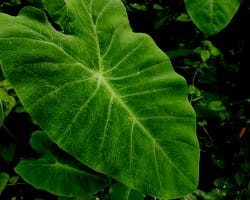
B. Health benefits of Taro leaves. Taro leaves are very beneficial for anemia.
Taro leaves is sources of iron. It is very helpful to increase hemoglobin levels in our bodies. If anyone is suffering from anaemia. Taro leaves are very helpful to increase hemoglobin levels.
C. Health benefits of Taro leaves: Taro leaves are very beneficial for weight loss.
Taro leaves contain very low calories and low fat. Taro leaves is sources of high fiber. If you eat very high-fiber food in your daily meals. It takes a very long time to digest. That’s why you feel less hungry for a long time. It helps with weight loss.
D. Taro leaves are very helpful to improve your eyesight.
Taro leaves are a great source of vitamin A and beta-carotene; it is very useful and important to improve our eyesight.
E. Taro leaves for the digestive system.
Taro leaves are a source of fiber and are also good for our digestive system because they maintain it. Taro leaves provide relief from constipation and gas.
Benefits of taro/arbi roots in diabetes.
When a sugar patient eats taro or Arabic food in their daily meals. It is very useful for a diabetic patient because taro roots very source of starch and fiber. It controls blood sugar levels and reduces the risk of diabetes.
Diabetic patient: foods to avoid:
A. Avoid sugar products like honey, sugar, very sweet packaged juice, etc.
B. Avoid sugary drinks and sweets, as they are the main cause of increased sugar levels in the blood.
C. Avoid fried or fast food.
D. Avoid very rich carbohydrate meals.
What are the nutritional benefits of taro?
It is very rich in fiber. It controls sugar levels in our blood. Potassium and magnesium are found in taro leaves or roots. It is very good for heart health and controls blood pressure.
Recipes named after taro leaves or plants or taro roots:
1. Taro Chips.
2. Taro Paneer Curry
3. Taro curry with eggs
4. Taro Soup
5. Taro Buns
6. Arbi Fry.
Don’t eat the direct form of taro leaves because taro leaves contain calcium oxalate. It is the cause of itching, swelling, or a stinging sensation in the throat and mouth. It is very dangerous when a child it leave in row forms; not only child anyone who eat in Raw form of taro leaves feels itching, swelling, or staining sensation in the throat and mouth.






Pingback: Pink Rain Lily Flowers {amazing 2 Rain Lily}